Why Buying Equipment Isn't Always the Smartest Business Decision.
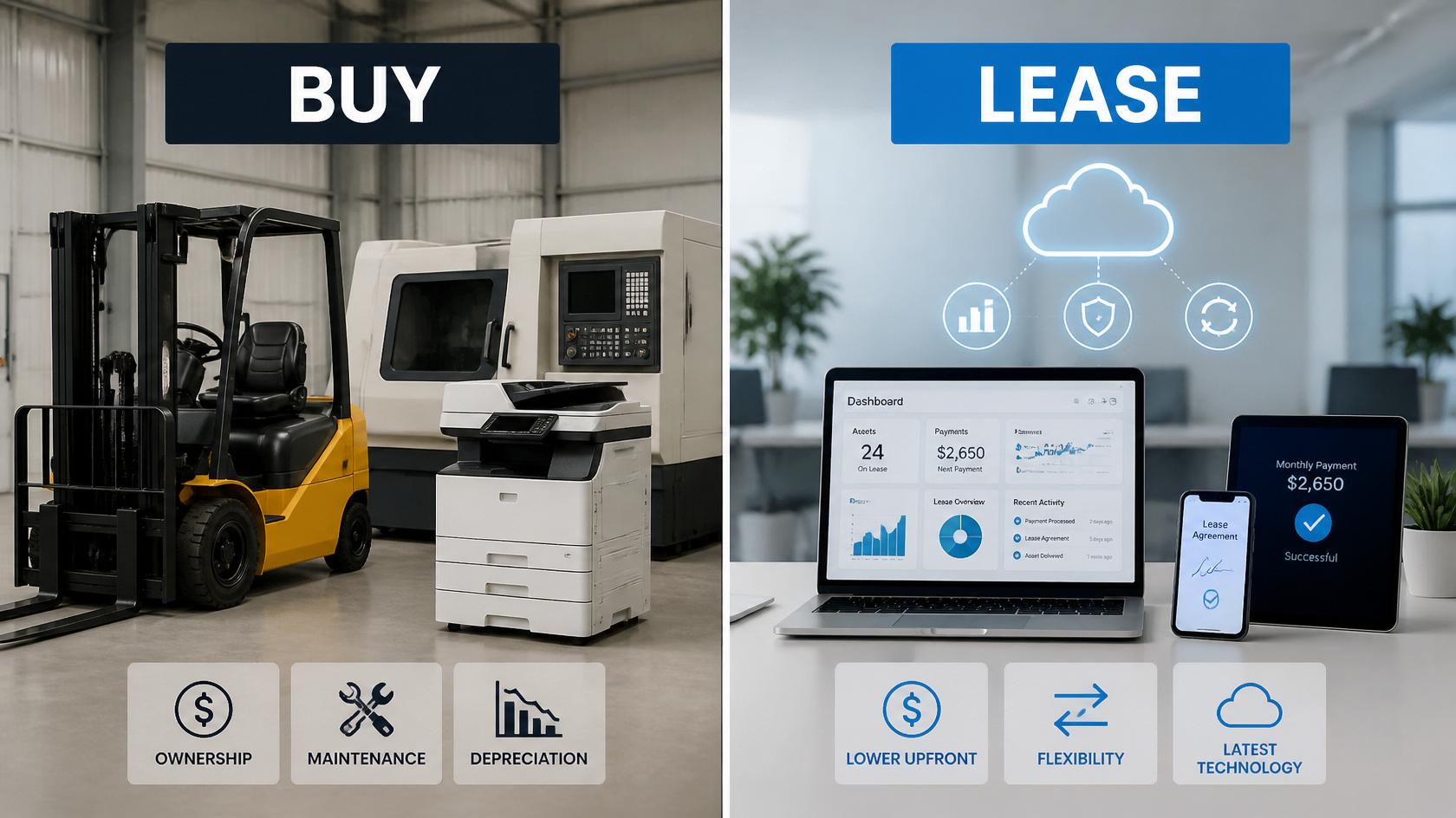
Every growing business reaches a point where it needs new equipment. It could be a delivery van, manufacturing machinery, medical equipment, or new office technology.
The first thought is often simple: If we can afford it, let's buy it.
Owning equipment feels like the smart choice. After all, it's an investment in your business.
But successful businesses don't make decisions based only on what they can afford today. They make decisions based on what helps the business grow tomorrow.
Before buying your next asset, ask yourself one important question:
Is buying this equipment the best use of my business's cash?
For many SMEs, the answer isn't always yes.
Why Buying Equipment Isn't Just About the Price
When comparing equipment options, most businesses look at one number—the purchase price.
But buying equipment is about much more than the initial cost.
Paying a large amount upfront means that money is no longer available for other parts of your business.
That same cash could be used to:
- Hire another employee
- Increase inventory before a busy season
- Invest in marketing
- Improve customer service
- Build a financial safety net
Every business has limited resources. Spending a large amount on equipment means giving up the opportunity to invest that money somewhere else.
This is known as opportunity cost, and it's something every business owner should consider before making a major purchase.
Cash Flow Is One of Your Biggest Business Assets
Cash flow keeps a business moving.
It pays suppliers, covers salaries, buys stock, and helps you deal with unexpected expenses.
Imagine a manufacturing company that spends most of its available cash on a new machine.
A few weeks later, a large customer places an order that requires extra raw materials and temporary staff.
The company has the work—but not enough available cash to take full advantage of the opportunity.
The machine wasn't the problem.
The timing of the purchase was.
Keeping healthy cash flow gives businesses the flexibility to respond when opportunities arise.
The Hidden Costs of Owning Equipment
The purchase price is only the beginning.
Owning equipment also means budgeting for:
- Maintenance and servicing
- Repairs
- Insurance
- Replacement parts
- Storage, where needed
Technology is another factor.
Many industries evolve quickly, and equipment that seems advanced today may become less efficient in just a few years.
When making a buying decision, it's important to think about the total cost of ownership, not just the purchase price.
Buying vs Financing: A Different Way to Think
Imagine two transport companies that both need a new truck.
The first company buys the truck outright.
The second company chooses equipment financing and spreads the cost over time.
Both companies have access to the same truck and can serve the same customers.
However, the second company still has cash available to hire another driver, invest in marketing, and take on additional work.
The difference isn't the truck.
It's how each business uses its capital.
Sometimes, preserving cash creates more long-term value than owning an asset from day one.
When Buying Makes Sense
Buying equipment isn't a bad decision.
In fact, it can be the right choice when:
- Your business has strong cash reserves.
- You expect to use the equipment for many years.
- The equipment is unlikely to become outdated.
- Ownership offers better long-term value.
Every business is different.
The best decision depends on your cash flow, business goals, and future plans—not simply whether you can afford the purchase.
Final Thoughts
Equipment helps your business operate, but cash helps your business grow.
Before making your next equipment purchase, look beyond the price tag and think about the bigger picture.
Ask yourself:
Will buying this equipment strengthen my business, or will it limit the opportunities I can invest in over the next few years?
The smartest business decisions balance today's needs with tomorrow's growth.
If you're exploring ways to access the equipment your business needs while protecting cash flow, LEASIT can help you understand your financing options and choose a solution that supports your long-term business goals.
Jhanavi Kannan
Contributing author to LEASIT Blog