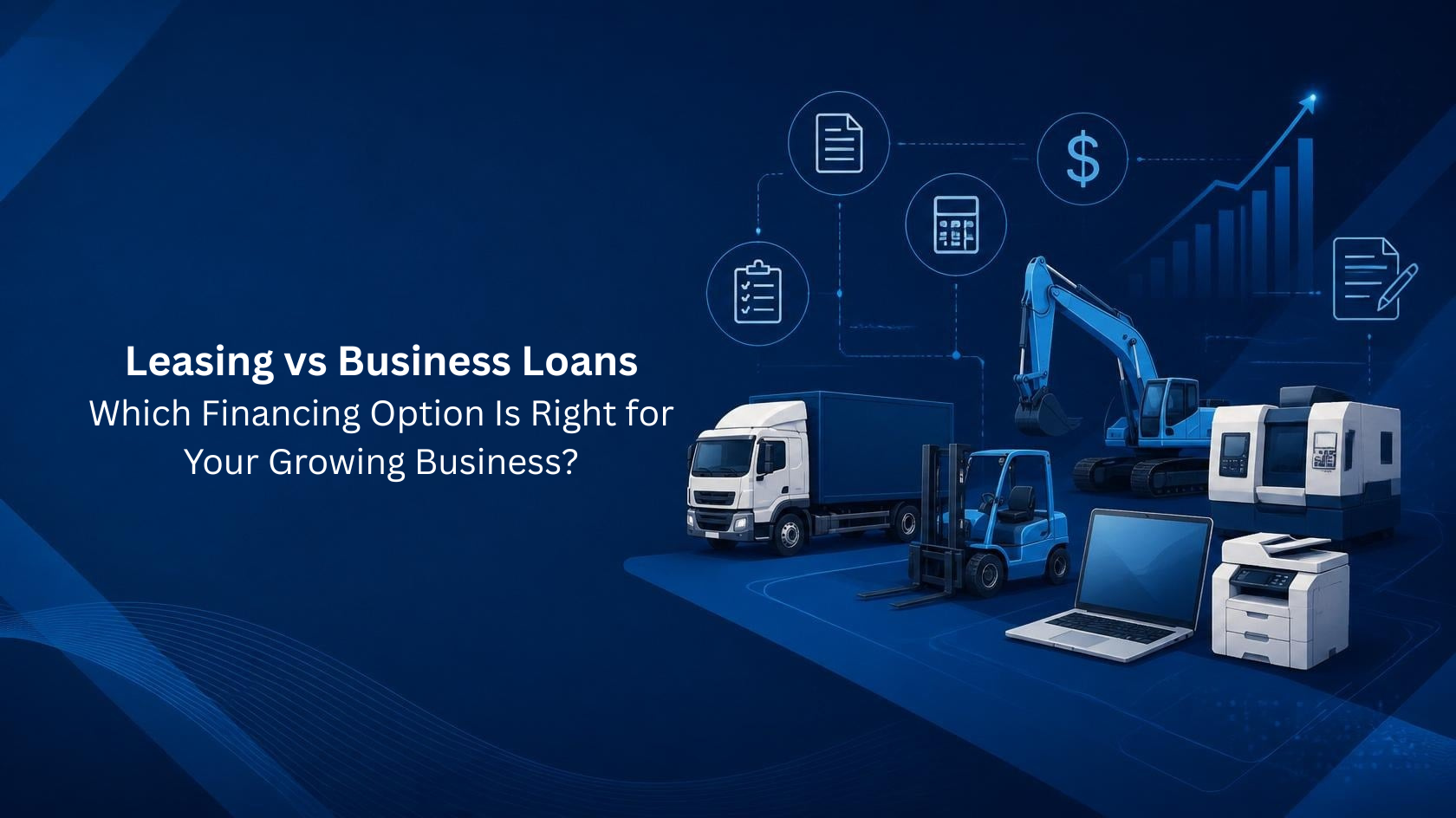
Leasing vs. Business Loans: Which Financing Option Is Right for Your Growing Business?
Growing a business often means making bigger investments.
Whether it's new equipment to increase production, additional vehicles to expand your operations, or upgraded technology to improve efficiency, these purchases can help move your business forward. But they also raise an important question:
How should you finance them?
For many businesses, the decision comes down to equipment leasing or a business loan. Both can help you acquire the assets you need, but they work in different ways and support different business goals.
The right choice isn't simply about which option costs less upfront—it's about choosing the financing solution that best fits your cash flow, growth plans, and long-term strategy.
Let's take a closer look.
Why Financing Decisions Matter
Every growing business faces the challenge of balancing expansion with financial stability.
Using too much cash to purchase equipment can limit your ability to cover day-to-day expenses or invest in new opportunities. On the other hand, choosing the wrong financing option can put unnecessary pressure on your finances.
A well-planned financing decision should help your business:
- Preserve healthy cash flow
- Invest in growth with confidence
- Maintain financial flexibility for future opportunities
Understanding how each financing option works is the first step toward making the right decision.
What Is Equipment Leasing?
Equipment leasing allows your business to use an asset without purchasing it outright.
Instead of paying the full purchase price upfront, you make regular lease payments over an agreed period while using the equipment in your business. Depending on the agreement, you may have the option to upgrade the equipment, extend the lease, purchase the asset at the end of the term, or simply return it.
Leasing is commonly used for equipment that changes quickly or may need regular upgrades, such as technology, office equipment, commercial vehicles, medical equipment, and specialized machinery.
What Is a Business Loan?
A business loan provides the funds to purchase equipment outright.
Your business owns the asset from day one while repaying the loan through scheduled instalments over an agreed period. Once the loan is repaid, the equipment remains yours, making this option particularly attractive for assets that will continue providing value for many years.
Leasing vs. Business Loans: At a Glance
While both options help businesses acquire the equipment they need, they offer different advantages depending on your priorities.
Ownership
- Leasing: You use the equipment during the lease term while ownership typically remains with the leasing provider.
- Business Loan: You own the equipment from day one while repaying the loan over time.
Upfront Costs
- Leasing: Generally requires a lower initial investment, helping preserve working capital.
- Business Loan: May require a deposit or down payment before purchasing the equipment.
Monthly Payments
- Leasing: Payments are often lower because you're paying for the use of the equipment rather than full ownership.
- Business Loan: Repayments are typically higher as you're financing the full purchase price.
Flexibility
- Leasing: Makes it easier to upgrade equipment as your business needs change.
- Business Loan: Better suited for equipment you plan to keep and use for many years.
Ultimately, neither option is universally better. The right choice depends on your business goals, cash flow, and how you plan to use the equipment.
Which Option Fits Different Business Goals?
There isn't a one-size-fits-all answer because every business has different priorities.
Leasing may be a better fit if your business wants to:
- Preserve cash flow
- Minimize upfront costs
- Upgrade equipment regularly
- Access newer technology
- Maintain greater financial flexibility
A business loan may be more suitable if you:
- Plan to keep the equipment for many years
- Want to build business assets
- Prefer ownership
- Expect long-term value from your investment
The best financing choice depends on how the equipment supports your business strategy—not simply on the monthly payment.
Final Thoughts
Choosing between leasing and a business loan isn't about finding a universally better option—it's about finding the option that best aligns with your business goals.
If flexibility, lower upfront costs, and preserving cash flow are priorities, leasing may be the right fit. If long-term ownership is your goal, a business loan could be the better choice.
By understanding how each option works and evaluating your business needs, you'll be in a stronger position to invest with confidence and support sustainable growth.
Jhanavi Kannan
Contributing author to LEASIT Blog